A Race Against Time for the Limb
Diabetic foot ulcers are a critical complication of diabetes, primarily because they often go unnoticed due to nerve damage that dulls pain perception. Their real danger lies in their stubborn resistance to healing, which significantly increases the risk of lower-limb amputation.
This is where hyperbaric oxygen therapy (HBOT) comes into play as a valuable adjunct treatment.
For decades, HBOT has been employed to treat chronic diabetic foot ulcers, with research indicating that it’s the combination of heightened pressure and oxygen that works effectively to promote healing.
How Diabetes Leads to Foot Ulcers
Diabetes is a chronic condition characterized by high blood sugar levels due to either inadequate insulin production, insulin resistance, or both. This disease significantly impacts multiple body systems, but it’s the repercussions on the feet that often bring severe health challenges, such as diabetic foot ulcers.
Before we detail how hyperbaric oxygen therapy can help in the fight against one of the worst complications imaginable for diabetic patients, we need to first comprehend how diabetes itself affects the body.
What is Diabetes?
Diabetes mellitus, commonly referred to simply as diabetes, is a metabolic disease that affects how the body processes blood glucose. There are two primary types: Type 1 diabetes, where the body doesn’t produce insulin, and Type 2 diabetes, where the body resists insulin. Both types lead to an array of complications from high blood sugar if not managed properly, including chronic diabetic foot ulcers and other severe conditions.
How are Foot Ulcers Formed and How Severe Can They Get
Foot ulcers develop mainly due to poor blood flow and neuropathy, which affect the diabetic patient’s ability to detect injuries.
This situation results in the foot tissue being both numb and starved for oxygen (tissue hypoxia) and nutrients. Combined with persistent pressure and inadequate wound healing, the situation creates a perfect storm for ulcer formation on the foot. Once formed, these chronic foot ulcers require diligent wound care and may necessitate interventions like hyperbaric oxygen therapy to facilitate tissue repair and promote healing.
The Wagner Grading System is a widely recognized method for assessing the severity of diabetic foot ulcers. It systematically categorizes ulcers from Grade 0 to Grade 5, providing a clear framework for diagnosis and treatment strategies:
- Grade 0: This represents a pre-ulcerative stage where the foot shows signs of deformity or is at risk due to callouses. At this point, no open lesions are present, but preventative care is crucial to avert further deterioration of the tissues.
- Grade 1: At this stage, superficial ulcers are present. These involve the entire surface of the skin but do not yet extend into the deeper layers of tissue. Prompt treatment can prevent further deterioration.
- Grade 2: Ulcers penetrate deeper into the skin layers, affecting tendons, bone, or joint capsules. At this stage, there’s a higher risk of infection, necessitating more aggressive management approaches.
- Grade 3: This grade involves deep ulcerations with abscess formation or infection of the bones (osteomyelitis). It indicates a significant risk, requiring immediate medical intervention to manage the infection and preserve limb function.
- Grade 4: Characterized by partial gangrene of the forefoot, this grade highlights substantial tissue necrosis. Urgent surgical and medical interventions are typically necessary to manage the condition.
- Grade 5: Representing the most severe stage, this grade is marked by extensive gangrene of the entire foot. It often indicates a need for amputation to prevent the spread of infection and safeguard the patient’s overall health.
Wounds classified from Wagner Grade 3-5 involve deep infections or extensive tissue loss, often indicating a higher risk of amputation and a more complex treatment plan.
Standard wound care, along with advanced methods like HBOT, plays a crucial role in optimizing treatment outcomes and managing these diabetic health complications to prevent progression and preserve limb functionality for patients.
The interplay between diabetes, neuropathy, blood circulation, and wound healing is critical. This knowledge can guide effective treatment strategies, including the use of HBOT, and improve outcomes for patients with diabetic foot ulcers.
What the Research Shows
Does the Pooled Research Actually Support HBOT for Diabetic Foot Ulcers?
Yes. A meta-analysis of 14 randomized controlled trials covering 768 patients found that hyperbaric oxygen therapy (HBOT) significantly improved complete wound healing and reduced major amputation risk compared to standard wound care alone. A separate systematic review analyzing outcomes by ulcer severity (using the Wagner Grading System) found HBOT significantly improved healing rates and reduced both minor and major amputations. The strongest amputation-prevention effect was specifically noted in the most severe diabetic foot ulcers.
What Does a Real Amputation-Rate Comparison Look Like?
In one randomized controlled trial of 38 patients in Taiwan with chronic diabetic foot ulcers considered poor candidates for vascular surgery, complete wound closure was achieved in 25% of the HBOT group versus 5.5% of the standard-care group. The amputation rate was roughly half in the HBOT group (5% versus 11%). That study specifically noted that at least 20 hyperbaric oxygen therapy sessions were required to see this effect, underscoring that this is not a quick-fix treatment for diabetic ulcers.
Is the Evidence Unanimous?
No, and it’s worth being straightforward about that. One well-designed randomized trial found HBOT did not significantly reduce amputation indications in its specific patient population, a result that stands somewhat apart from the broader meta-analyses. This kind of mixed result is common in wound-care research generally, where wound severity, blood flow status, and patient selection all significantly affect outcomes. The pooled evidence across multiple systematic reviews leans toward a benefit, particularly for more severe, harder-to-heal diabetic ulcers, but individual results vary. HBOT works best as part of a comprehensive diabetes care plan along with standard therapy, not as a stand-alone fix.
What Pressure Range Does This Research Actually Require?
This is where the evidence is unusually consistent: Research indicates that effective hyperbaric oxygen treatment protocols operate consistently within a pressure range of 2.0–3.0 ATA. Sessions typically last between 45 and 120 minutes, with a minimum effective course often cited as 20 sessions. For more severe diabetic ulcers, this can extend to 30–60 sessions. This specific pressure range is non-negotiable, as it is essential for driving dissolved oxygen into poorly-perfused tissues, which is critical for wound healing.
Why Does Pressure Matter More Than For Many Other Conditions?
Diabetic foot ulcers arise from a dual complication: peripheral neuropathy (nerve damage) and peripheral arterial disease (reduced blood flow), which leads to oxygen-starved tissues. Achieving therapeutic tissue oxygenation in such compromised areas requires significantly higher pressure than treating other conditions with better blood circulation. This necessity for increased pressure makes treatment for diabetic ulcers typically settle at 2.0 ATA and above, as indicated by controlled clinical trials and systematic reviews, rather than at lighter wellness-level pressures.
Quick Facts Sidebar
- Clinical pressure range: 2.0–3.0 ATA
- Minimum effective course: at least 20 sessions; often 30–60 for severe wounds
- Meta-analysis finding: significant improvement in complete healing, reduced major amputation risk
- Best evidence: most severe wound grades (Wagner III–IV)
- Important caveat: evidence is strong but not unanimous; individual trial results vary by wound severity and vascular status
Why the Hyperbaric Chamber Type Matters Here
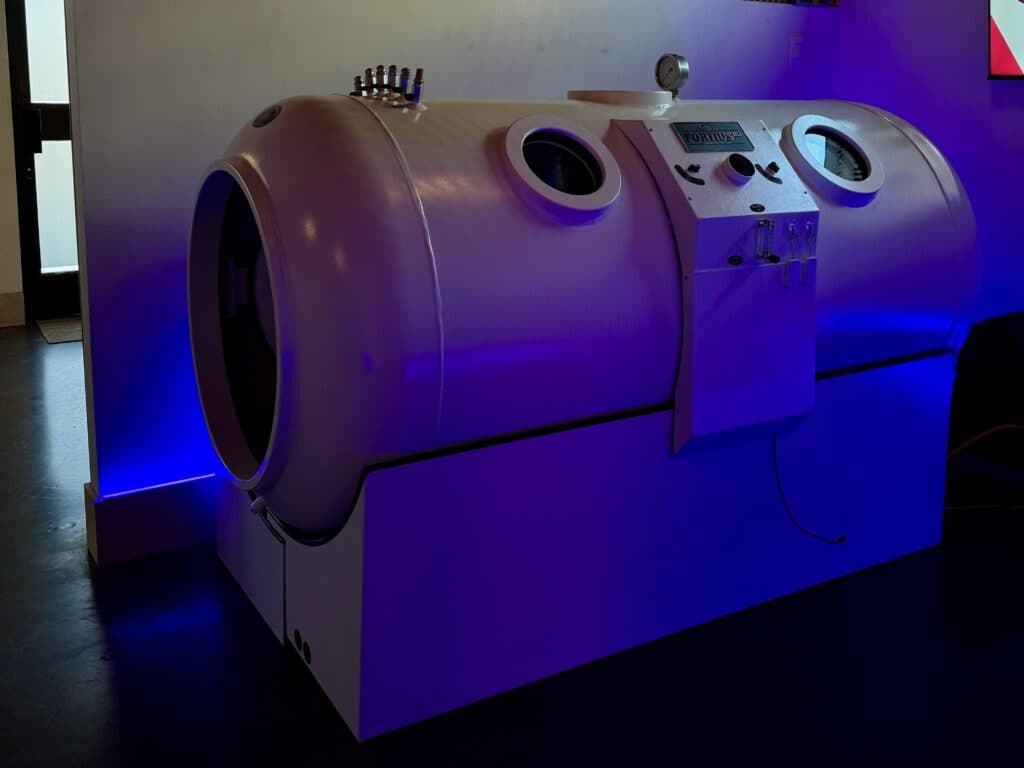
This is one of the clearest examples in HBOT research where pressure threshold isn’t a preference: it’s the mechanism. Every major trial and meta-analysis shows meaningful amputation-risk reduction among diabetic patients operated at 2.0 ATA or above. Our Fortius chamber, a hard-shell, hospital-grade unit reaching 2.0–2.2 ATA, is built to deliver the pressure this specific body of research depends on.
Hyperbaric Oxygen Therapy for Diabetic Foot Ulcers: Why Choose ReEnergized
If you or someone you care about is managing a diabetic foot ulcer that isn’t responding to standard wound care, this is one of the better-studied reasons to have a conversation with your podiatrist or wound care physician about whether HBOT belongs in the treatment plan. We coordinate with your existing care team rather than working around it.
HBOT for diabetic foot ulcers should be coordinated with your podiatrist, vascular specialist, or wound care physician. This article summarizes published research for educational purposes and is not medical advice.