One of HBOT's Most Established Uses
Of everything covered in this series, hyperbaric oxygen therapy (HBOT) for radiation effects is the application of hyperbaric medicine with the most regulatory backing behind it. Hyperbaric oxygen therapy is FDA-cleared specifically for late radiation tissue injury, including conditions like osteoradionecrosis and radiation cystitis. It’s recognized by the Undersea and Hyperbaric Medical Society as an established indication, thanks to its benefits for delayed radiation injury, improved blood flow, and increased oxygen tension in affected areas. This therapy is commonly covered by insurance when medical criteria are met, as it significantly enhances the quality of life for many patients suffering from radiation injury or the adverse effects of cancer treatment.
What the Research Shows About Hyperbaric Oxygen Therapy for Treating Radiation Injuries
The growing body of research on hyperbaric oxygen therapy (HBOT) highlights its potential as an effective treatment modality for radiation injuries and the side effects of cancer-related treatments. Numerous clinical studies and trials have demonstrated how HBOT enhances tissue healing by delivering high concentrations of oxygen to compromised sites, encouraging angiogenesis, and reducing inflammation.
For individuals experiencing delayed radiation injuries, such as radiation cystitis or any affecting bone, muscle, and soft tissues, these studies provide promising results and underscore HBOT’s therapeutic value. Emerging clinical evidence also explores its role in mitigating acute side effects from cancer therapies, offering hope for improved patient outcomes and quality of life.
Below, we delve into the findings of pivotal research studies that have paved the way for hyperbaric oxygen therapy’s acceptance as a formidable tool in the arsenal against radiation therapy injuries.
Why would radiation therapy damage need oxygen therapy?
Radiation therapy is remarkably effective at killing cancer cells, but radiation exposure also damages the healthy tissue and blood vessels surrounding the treatment area, a phenomenon researchers describe as “3-H tissue”: hypocellular, hypovascular, and hypoxic. This damage can contribute to impaired wound healing and leave damaged tissues with a reduced ability to recover normally.
That radiation damage can even surface months or even years after treatment ends in the form of a delayed radiation injury, causing chronic pain, tissue breakdown, non healing wounds, or radiation necrosis such as bony necrosis in the radiated area. Because the underlying problem is reduced blood vessel density and oxygen delivery, hyperbaric treatments directly address the root mechanism rather than just managing symptoms.
What does HBOT actually do to radiated tissue?
During HBOT, patients breathe pure oxygen inside a pressurized chamber throughout the treatment session, substantially increasing the amount of oxygen available to oxygen-deprived tissue.
Research describes both short- and long-term effects: in the short term, HBOT reduces tissue swelling and activates phagocytosis (the immune system’s cellular cleanup process); over a longer course of treatment, it drives neovascularization (new blood vessel growth), bone regeneration, and collagen formation by fibroblasts. One study found measurable new blood vessel growth after as few as eight HBOT sessions.
Is there actual randomized trial data, or just observational reports?
Yes, this is one of the more rigorously studied applications of hyperbaric oxygen therapy (HBOT). Two notable randomized controlled trials (HORTIS-IV and HOT2) specifically examined HBOT for chronic radiation proctitis, a form of radiation injury to rectal tissue after pelvic cancer treatment, both comparing real hyperbaric oxygen treatments at 2.0 absolute atmospheres (ATA) against a low-pressure air control. A separate randomized trial specifically found benefits for breast cancer patients with painful, long-term radiation therapy-related side effects, including radiation cystitis, and a systematic review covering more than 1,300 breast cancer patients evaluated HBOT’s effect on pain, fibrosis, and tissue necrosis from radiation therapy.
What’s the typical protocol for radiation injury?
Across this research, treatment is consistently delivered in a hyperbaric oxygen chamber at 2.0–2.5 ATA, usually as daily sessions over six to eight consecutive weeks, a substantially longer course than many other hyperbaric oxygen applications. This reflects the fact that tissue revascularization and increasing blood flow is a slower biological process than acute wound closure, necessary to mitigate radiation tissue injury.
Does HBOT interfere with cancer treatment or make tumors grow?
This is a common and understandable concern, and it’s worth addressing directly. Several studies have specifically examined whether increased oxygen delivery at higher atmospheric pressures accelerates cancer growth, particularly in the context of radiotherapy and hyperbaric oxygen therapy, and the research does not support that concern for the approved use of treating delayed radiation injury.
HBOT is not itself a cancer treatment or cure. This is an important distinction when considering the role of hyperbaric oxygen therapy. Radiation therapy can cause collateral damage to healthy tissues and blood vessels, and HBOT is specifically used to help support the repair of this radiation tissue damage. It is generally used alongside or after standard oncology care, under medical supervision, aiming to improve the patient’s quality of life and minimize adverse effects related to radiotoxicity and genotoxicity.
The Most Common Types of Radiation Tissue Injuries HBOT Can Treat
Hyperbaric Oxygen Therapy (HBOT) has proven beneficial for several types of radiation tissue injuries, addressing complications that arise in patients treated with radiation for various cancers. The key radiation injuries that HBOT can help manage and heal include:
- Radiation Proctitis: Often occurring in patients who have undergone pelvic radiotherapy for prostate cancer or other pelvic cancers, radiation proctitis can lead to inflammation and damage to the rectal tissue. HBOT helps by promoting healing and revascularization of the injured tissue.
- Radiation-Induced Hemorrhagic Cystitis: Common in bladder cancer survivors and other pelvic cancer patients, this condition involves inflammation of the bladder walls caused by radiation. HBOT aids in reducing symptoms and improving bladder function.
- Osteoradionecrosis: This severe condition affects the jawbones (mandible and maxilla) following radiation treatment for head or neck cancers. HBOT enhances blood flow and stimulates healing in the necrotic bone tissue.
- Soft Tissue Necrosis: Occurring in breast cancer patients or those who have undergone surgery and radiation in various body parts, HBOT assists in restoring oxygenation to damaged tissues, supporting healing and mitigating fibrosis caused by radiation.
- Radiation-Induced Lymphedema: Patients undergoing lymph node irradiation may develop lymphedema, where HBOT can contribute to decreased swelling and improved lymphatic flow.
When addressing these complications, hyperbaric medicine plays a crucial role in the comprehensive management of radiation therapy side effects, fostering better functional outcomes and quality of life for cancer survivors.
Quick Facts Sidebar
- FDA-cleared indication: late radiation tissue injury
- Clinical pressure range: 2.0–2.5 ATA
- Typical course: daily sessions over 6–8 weeks
- Documented conditions: radiation proctitis, osteoradionecrosis, breast tissue fibrosis/necrosis, radiation cystitis
- Mechanism: neovascularization, collagen formation, reduced inflammation, restored tissue oxygenation
Why Chamber Type Matters Here
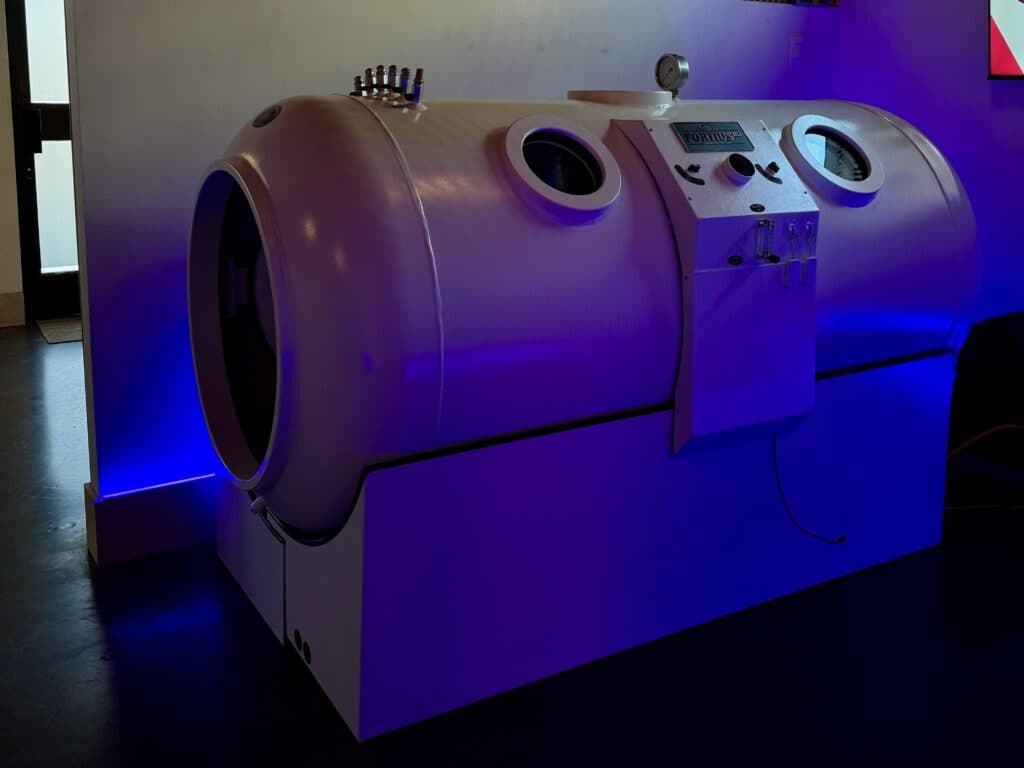
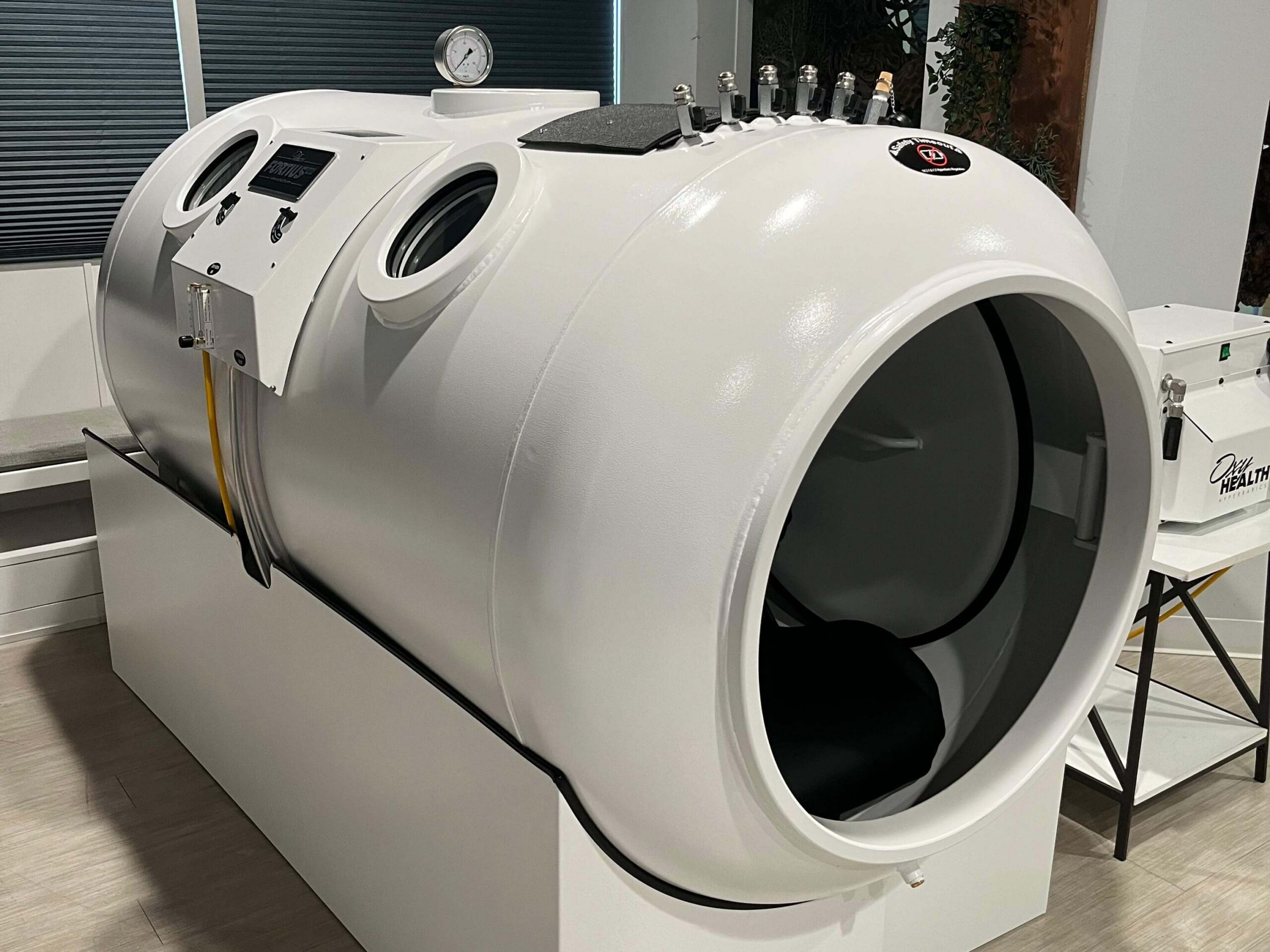
This is one of the clearest cases where pressure isn’t optional. The FDA-cleared protocol and every major clinical trial in this area operates at 2.0–2.5 ATA. A hyperbaric chamber that can’t reach and sustain that pressure simply isn’t delivering the treatment this research describes. Our Fortius chamber, a hard-shell, medical-grade HBOT unit reaching 2.0–2.2 ATA, is built for exactly this kind of clinically-recognized protocol.
HBOT for Treating Radiation Therapy Injuries in Cancer Patients: Why Choose ReEnergized
If you’re a cancer survivor dealing with delayed radiation side effects, whether that’s chronic pain, slow-healing tissue, or bone changes in a previously radiated area, this is one of the best-supported reasons to consider HBOT. We coordinate closely with your oncology team to make sure the timing and protocol of your HBOT treatment plan fit safely into your broader care plan.
HBOT for radiation injury should be coordinated with your oncologist. This article summarizes published clinical research for educational purposes and is not medical advice.