Most athletes first hear about hyperbaric chambers as a recovery tool. The more interesting question is whether HBOT can change the engine itself: the mitochondria that turn oxygen into energy. Dr. Joseph Maroon, a University of Pittsburgh neurosurgeon who has long served as a consultant to professional football and wrestling organizations, and a lifelong endurance athlete, addressed that question at the International Hyperbarics Association's 2026 conference. His talk combined the published trial data with his own experience as a test subject.
What the Research Shows
1. Is there a controlled trial of HBOT in healthy athletes?
Yes. Hadanny and colleagues ran a double-blind, randomized, placebo-controlled trial in 37 healthy master athletes aged 40 to 50 who trained aerobically at least four times a week, published in Sports Medicine – Open in 2022. The HBOT group breathed 100% oxygen at 2.0 ATA for one hour; the sham group breathed air at 1.02 ATA for the same time. Both groups completed 40 sessions, five per week, over about two months. Sixteen HBOT and 15 sham participants were included in the final analysis. It is a small study, but it is randomized and blinded, which makes it the best single source on this question.
2. What changed in the athletes?
Compared with sham, the HBOT group improved VO2max, power, and oxygen uptake at the anaerobic threshold. Muscle biopsies showed increased mitochondrial mass and improved mitochondrial respiration. In other words, the performance gains came with measurable structural changes inside the muscle cells, not just a subjective sense of feeling better.
3. Why would oxygen build more mitochondria?
Repeated high-to-normal oxygen swings act as a controlled stress, a form of hormesis, that switches on the same adaptation pathways exercise uses (Hadanny and Efrati, Biomolecules, 2020). Laboratory work supports this: a 2025 study in the Journal of Applied Physiology (Young et al.) found hyperbaric oxygen increased mitochondrial biogenesis and function in heart muscle cells. That study was done in cells, not people, so it explains a mechanism rather than proving a benefit.
4. What did Dr. Maroon find when he tried it himself?
Dr. Maroon reported completing a course of 60 sessions at 2.0 ATA and then measuring gains in endurance, anaerobic threshold, and power output, along with a triathlon time about 9% faster than before. He presented this as personal experience, and it should be read that way: one person, no control, no blinding. It is a useful illustration of what the trial data looks like in a real athlete, not evidence on its own.
5. Who might benefit, and who should be cautious?
The trial studied healthy, trained athletes in their 40s, so the results apply most directly to masters athletes looking to improve or to slow age-related decline. Younger elite athletes have not been studied the same way. People with lung disease, a history of collapsed lung, or ear and sinus problems need medical screening first. HBOT is also not a substitute for training; in the study, it was added to the athletes' normal routines.
6. How should athletes schedule it?
The trial used 40 sessions over roughly eight weeks, which is a significant time commitment. Many athletes plan a block during an off-season or base-building phase rather than during peak competition. Timing around hard training and heat exposure is still being studied, so we plan courses individually.
Quick Facts Sidebar
- Best evidence: double-blind, randomized, placebo-controlled trial in 37 master athletes (Hadanny et al., 2022)
- Protocol studied: 40 one-hour sessions at 2.0 ATA with 100% oxygen, five per week
- Measured gains: VO2max, power, anaerobic threshold, mitochondrial mass and respiration
- Mechanism: hyperoxic-hypoxic paradox driving mitochondrial biogenesis
- Evidence level: one small but well-designed human trial plus supporting lab studies; a personal case report from Dr. Maroon
Why Chamber Type Matters Here
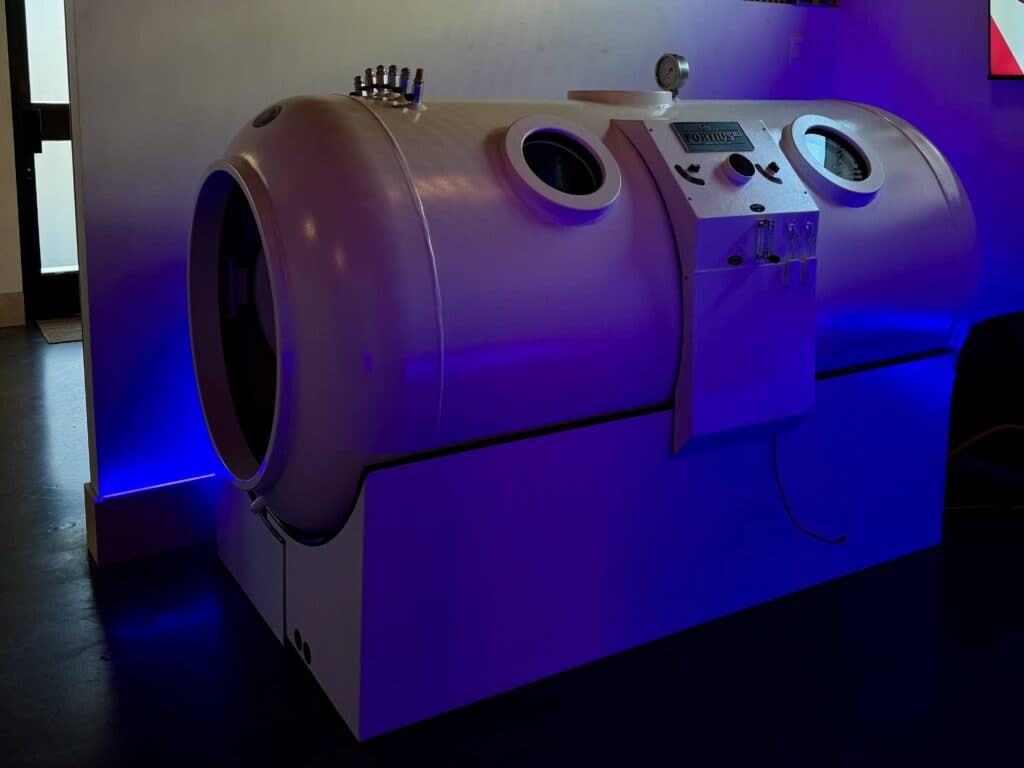
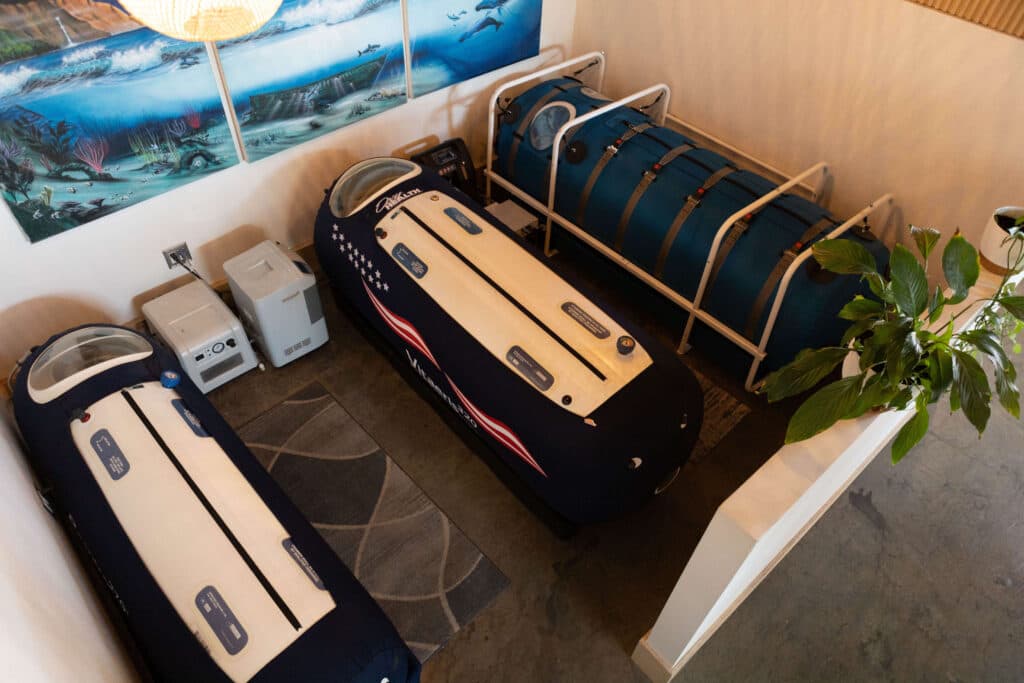
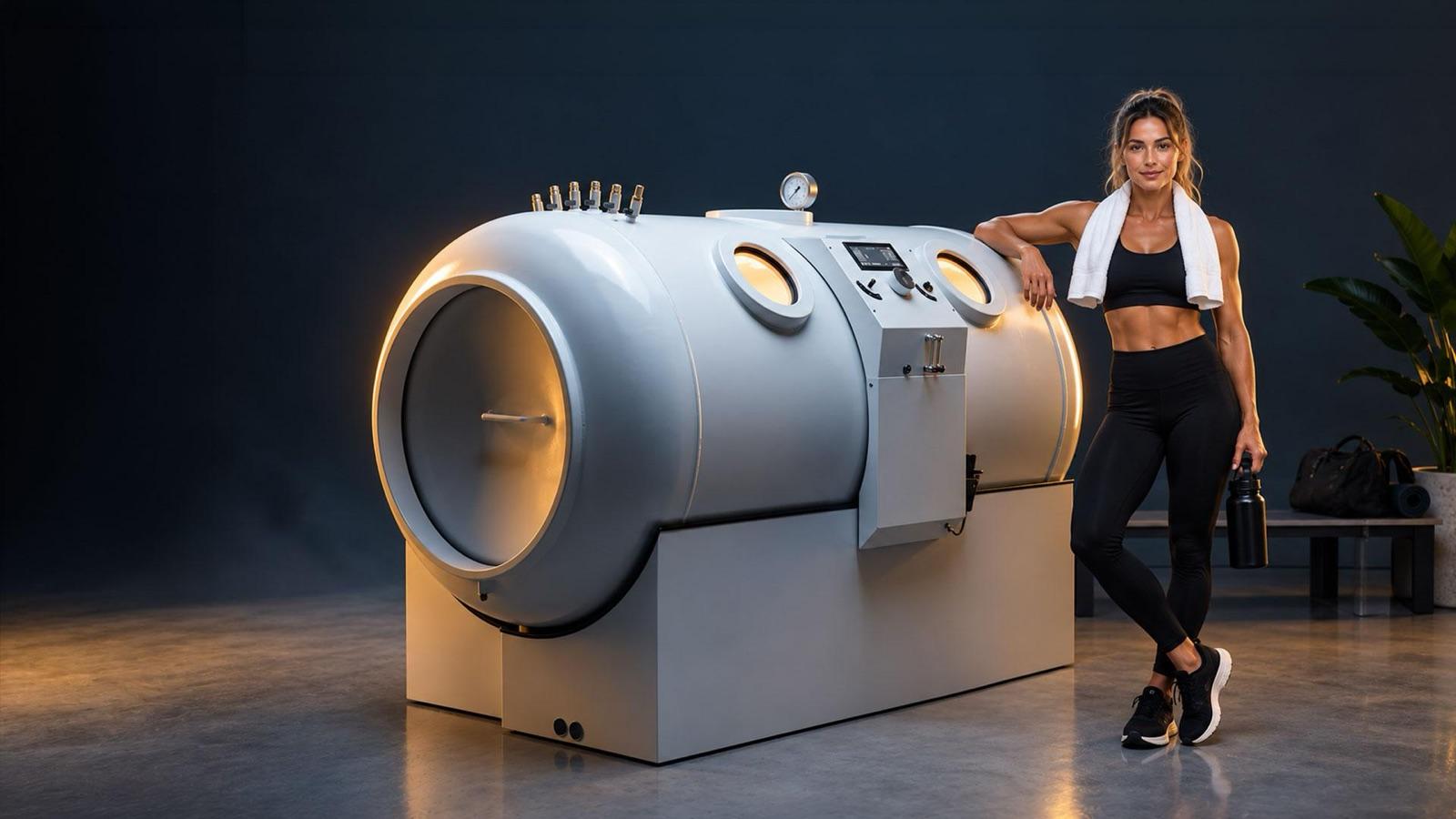
The athletic performance trial was run at 2.0 ATA on 100% oxygen, compared against a placebo at essentially normal pressure. That combination produces the large oxygen swing behind the mitochondrial response. Our Fortius hard-shell chamber operates at 2.0–2.2 ATA, matching the research protocol. Our mild chambers are excellent for general recovery days, but if your goal is the specific adaptations measured in this trial, the Fortius is the chamber designed for it.
Why Choose ReEnergized
We work with athletes of every level in Long Beach, from water polo to endurance and team sports. We design HBOT blocks around your training calendar and pair them with recovery tools like compression and red light therapy. Ask us how a 2.0 ATA performance block could fit into your next training cycle.
References
- Maroon JC, Aydin S, Waheed AA. "Hyperbaric Oxygen Therapy in Sports Medicine." Presentation, IHA 17th Annual Conference, Pensacola Beach, FL, October 2026.
- Hadanny A, Hachmo Y, Rozali D, et al. Effects of hyperbaric oxygen therapy on mitochondrial respiration and physical performance in middle-aged athletes: a blinded, randomized controlled trial. Sports Medicine – Open, 2022;8:22. doi:10.1186/s40798-021-00403-w
- Young et al. Hyperbaric oxygen and mitochondrial biogenesis and function in cardiomyocytes. Journal of Applied Physiology, 2025. doi:10.1152/japplphysiol.00428.2024
- Hadanny A, Efrati S. The hyperoxic-hypoxic paradox. Biomolecules, 2020.
Talk with your physician before adding HBOT to a training program, especially if you have lung, ear, sinus, or heart conditions. This article summarizes published research and conference presentations for educational purposes and is not medical advice.